

If I Get 50/50 Custody, Do I Need to Pay Child Support?
Determining which parents have legal and physical custody of a child and what, if any, child support is to be paid are often issues that are both worked out during a divorce proceeding, or, if the parents were never married, may nevertheless be established in court at around the same time. Parents who are negotiating between themselves on these issues – or just “discussing” the issues of custody and support more informally – are often confused as to how these two issues impact each other under California law. In fact, one of the more common questions that parents seeking joint custody (or “50/50 custody”) is whether either parents would need to pay child support in light of the shared custody arrangement.

Do I Need a Lawyer to Get a Child Support Modification?
If you’ve been collecting child support payments for the care of a child from another parent but still not making ends meet, or perhaps your child is not enjoying the financial security he or she should have based on the current economic stability of the other parent, you may be entitled to a modification in your child support payment. Or perhaps you have been paying child support to another parent, and either your situation or their situation has changed such that it no longer makes sense to pay the same rate you’ve been paying. Naturally, you are probably dealing with financial struggles which are at the very heart of your need for a child support modification, and so you might ask the question of whether you need to hire a lawyer in order to obtain the child support modification you are seeking.

Is There a Statute of Limitations On Seeking Child Support?
If you are taking care of a child and the other parent of the child is not providing financial support for that child, then you may be wondering what your options are in California for seeking child support. Oftentimes, child support is awarded as part of a divorce proceedings or around the time the child is born, but a parent may not have pursued child support for any number or reasons, such as

How to Modify Your Spousal Support Amount
In California, a final spousal support amount (which is separate from any temporary spousal support ordered during the divorce process) will be awarded as part of the final divorce order entered by the judge. The amount and duration of this award could have been reached by the judge or through an agreement between the parties, but regardless of how the amount was reached, the payor spouse is required to pay that amount of spousal support to the payee spouse per the terms of the order.

Calculating How Much Alimony You Will Get in California
When you are making the transition from married life and entering into the uncharted territories of the divorce process and beyond, you are probably wondering one of two questions: 1) “How much alimony will I paid?” or 2) “How much alimony will I be expected to pay?” Both are important questions, and bring us to the question of understanding how California calculates spousal support (or “alimony”) awards.

What is the Difference Between Alimony and Spousal Support?
“Alimony” (or “spousal support”) is one of those terms you’ve probably heard all of your life, but you may have assumed that you would never have to deal with the topic personally. But when you find that your marriage is possibly coming to an end, it is a topic that can have a huge impact on your life, whether you’re on the paying end or the receiving end of it (and if you don’t which one you might be, we’ll get into that too). There are a lot of misconceptions and confusing aspects of alimony and spousal support, and below we’ll do our best to clear a few of them up.
Is a Paternity Test Required For Child Support?
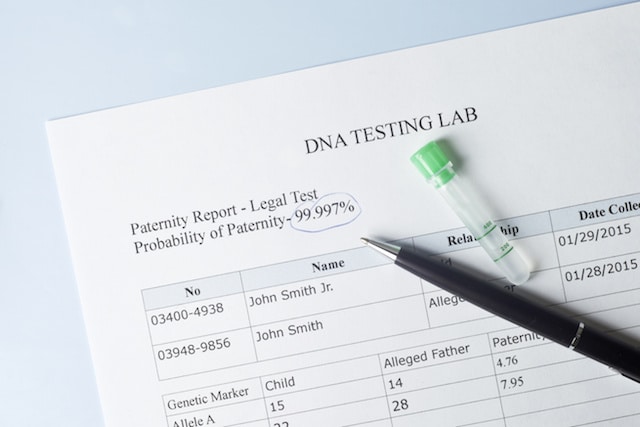
It is a bedrock of California family law that a biological father of a child is required to provide financial support to that child, regardless of whether the father was ever married to the mother, or if he even knew of the child’s existence. But before a California court will require that a man pay child support to a child that he fathered, the paternity of the child will have to proven to the courts. Sometimes this requires a paternity test, but not always.

The Collaborative Team
The collaborative divorce model involves a team approach to resolve disputes. Because the team members are working together to reach a settlement, the adversarial nature and posturing often found in traditional divorce litigation is lessened. Every family dynamic and needs are different so not all cases will require the involvement of the entire team. However, all collaborative divorces require each party to have an attorney. A complete collaborative divorce team includes: two collaborative attorneys, two coaches, one neutral financial professional and a child specialist. The role of each team member is briefly described below:

Pros & Cons of Collaborative Divorce
There are several ways to obtain a divorce in California. The spectrum of options ranges from the do-it-yourself divorce; mediation; collaboration or traditional litigation. However, no one particular option is one-size fits all. You must decide which method is best for you and your family under the very specific facts/circumstances. With that in mind, here are some pros and cons one must consider before choosing collaborative divorce as your option.
KFinanLaw.com is now launched!
Welcome to KFinanLaw.com! We appreciate any and all feedback regarding the new website.