
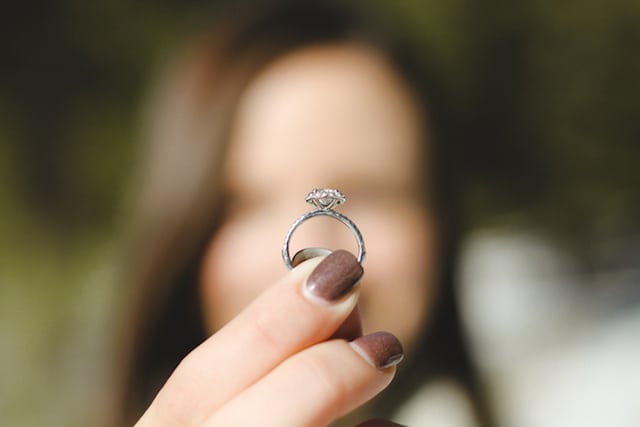
When couples divorce in California, one of the first things they start thinking through is who should receive what property when they part ways. For many couples, especially those on the younger side, an engagement ring might be one of the more valuable items in the household. Which raises the question of whether the recipient of the engagement ring gets to keep it or whether the value should be shared between the spouses, which comes down to determining whether the engagement ring is separate property or community property.
Most Engagement Rings Will Stay With the Recipient
Separate property includes all the property owned by each spouse before the marriage, or which was given specifically to one spouse by a third party during the marriage. Such property stays with that spouse after the divorce. Community property is everything else: basically all money and property earned or acquired with earnings during the marriage by either party. Community property is split 50/50 in a divorce.
Because an engagement ring is typically given by one spouse to the other before the marriage, the ring will be considered separate property belonging to the recipient, meaning that spouse gets to keep it and can do whatever he or she wants with it. But separate property can be converted into community property through the process of transmutation, which is a written document by which the spouses agree to treat the property listed as community property. A court will uphold such an agreement.
Rings and Other Jewelry Given After the Wedding
It is not unheard of for a couple to delay buying a proper engagement ring until the couple is already married and financially able to afford the ring they want. In that case, assuming the ring is purchased with funds earned during the marriage, then there is a high likelihood that the property will be considered community property if the cost of the ring is substantial relative to the couple’s financial circumstances.
Note that, under California law, gifts of jewelry given by one spouse to the other during a marriage will be considered separate property of the recipient even without a transmutation agreement, but this will not be the case if the cost of the property is substantial relative to the couple’s financial circumstances or if the gift is used by both spouses.
For any questions on family law in California, contact the Law Office of Kelly Finan today to schedule a consultation to discuss your circumstances.