
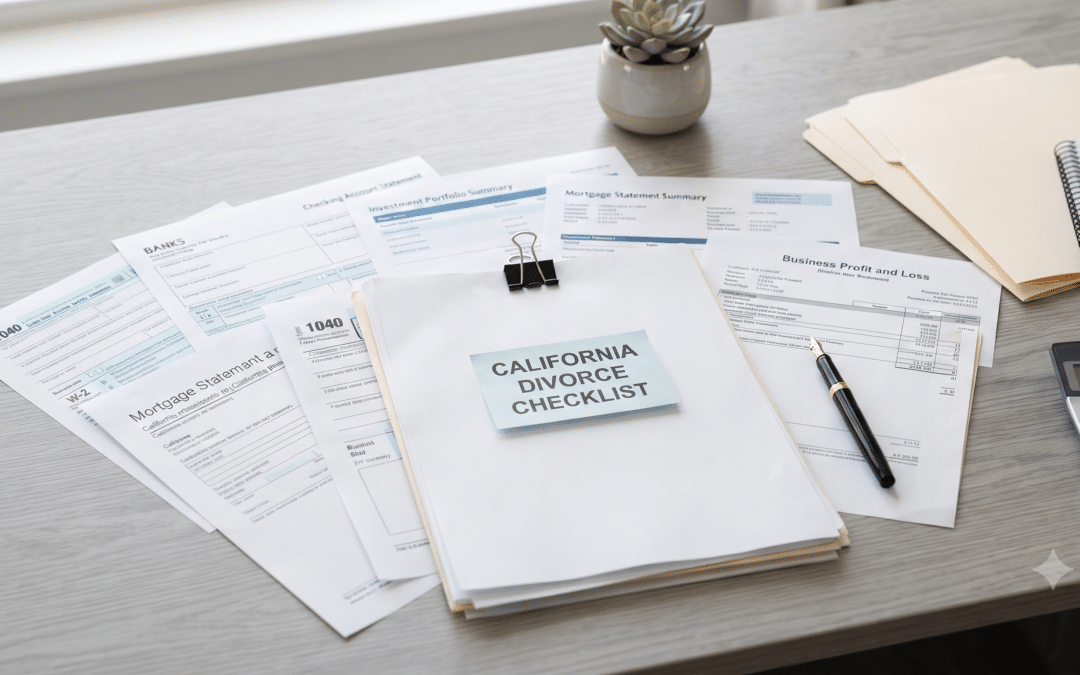
If you are thinking about filing for divorce, one of the smartest things you can do before anything is filed is gather your financial documents.
I cannot tell you how many times clients come into my office after filing only to realize they do not have access to important records, account statements, or financial information.
The reality is simple: information is power.
The more organized you are before filing, the better positioned you will be to make informed decisions, evaluate settlement options, and protect your financial future. As a California family law attorney, one of the first things I discuss with clients is creating a California divorce checklist that includes gathering key financial documents.
Here is where I recommend starting.
Why Gathering Documents Early Matters
Divorce is, in many ways, a financial transaction. Before assets, debts, support, or property division can be addressed, everyone needs a clear understanding of the financial picture.
Having documents readily available can help:
-
Identify community property assets
-
Identify separate property claims
-
Determine income available for support
-
Evaluate business interests
-
Locate retirement accounts
-
Reduce discovery costs
-
Avoid unnecessary delays
The goal is not to hide information; the goal is to understand it.
The California Divorce Checklist: Financial Documents to Gather
Tax Returns
Start with tax returns from at least the last three years. These often provide a roadmap to the family’s financial life. Gather:
-
Federal tax returns
-
State tax returns
-
All schedules and attachments
-
W-2s
-
1099s
-
K-1s
Tax returns frequently reveal assets, investments, businesses, rental properties, and income sources that might otherwise be overlooked.
Income Documentation
You should gather documentation showing all sources of income. Examples include:
-
Pay stubs
-
Bonus records
-
Commission statements
-
Deferred compensation information
-
Stock option documentation
-
RSU statements
-
Profit-sharing records
-
Pension information
For executives and business owners, compensation often extends far beyond base salary.
Bank Account Statements
Collect statements for:
-
Checking accounts
-
Savings accounts
-
Money market accounts
-
Credit unions
-
Online banking accounts
Ideally, gather at least the most recent 12 months of statements.
Investment Account Statements
Do not overlook:
-
Brokerage accounts
-
Mutual funds
-
Stocks
-
Bonds
-
Cryptocurrency holdings
-
College savings plans
-
Trust-related accounts
Many clients are surprised by how quickly investment assets can become a major issue in a divorce.
Retirement Accounts
Retirement assets are often among the largest marital assets. Gather statements for:
-
401(k)s
-
IRAs
-
Roth IRAs
-
Pensions
-
Deferred compensation plans
-
Executive retirement plans
If you are a longshoreman, make sure to obtain records relating to pension and retirement benefits as well.
Real Estate Documents
For all real property, gather:
-
Mortgage statements
-
Deeds
-
Property tax records
-
Refinance documents
-
Home equity line statements
-
Purchase documents
This applies to primary residences, rental properties, vacation homes, and investment properties.
Business Records
If you own a business, start gathering:
-
Profit and loss statements
-
Balance sheets
-
Corporate tax returns
-
Partnership agreements
-
Operating agreements
-
Buy-sell agreements
-
Business bank statements
Business valuation issues frequently arise in California divorces involving entrepreneurs and executives.
Debt Documentation
It is not just about assets. Gather information regarding:
-
Credit cards
-
Personal loans
-
Business loans
-
Student loans
-
Vehicle loans
-
Lines of credit
Understanding the debt picture is just as important as understanding the asset picture.
Insurance Documents
Collect information regarding:
-
Life insurance
-
Disability insurance
-
Health insurance
-
Long-term care insurance
These policies can have significant value and may impact settlement discussions.
Estate Planning Documents
Gather:
-
Trusts
-
Wills
-
Powers of attorney
-
Beneficiary designations
Many people forget these documents, but they can provide valuable information regarding assets and planning decisions.
The Biggest Mistake People Make
The biggest mistake I see is waiting until after the divorce is filed to start collecting documents. Sometimes accounts get closed, passwords change, or records become harder to access. The earlier you gather information, the easier the process usually becomes.
The No-BS Reality
Many people want to file immediately because they are angry, frustrated, or emotionally exhausted. I understand that. But before you focus on filing, spend some time understanding your finances. Divorce decisions made without complete financial information are rarely good decisions.
You do not need every document in existence before speaking with an attorney. However, having a solid California divorce checklist and gathering key financial records early can save significant time, money, and stress.
Final Thoughts
If you are considering divorce, gathering financial documents should be one of your first priorities. The more information you have, the better equipped you will be to evaluate your options, protect your interests, and make informed decisions about your future.
Whether you are an executive, business owner, entrepreneur, professional, longshoreman, or stay-at-home parent, understanding the family’s finances is a critical first step. If you are considering divorce in Torrance, Redondo Beach, Manhattan Beach, Hermosa Beach, Palos Verdes, Long Beach, San Pedro, Wilmington, or elsewhere in Los Angeles County, Finan Family Law, APC can help you understand what information you need and how to prepare before filing.